Wednesday, July 2, 2014

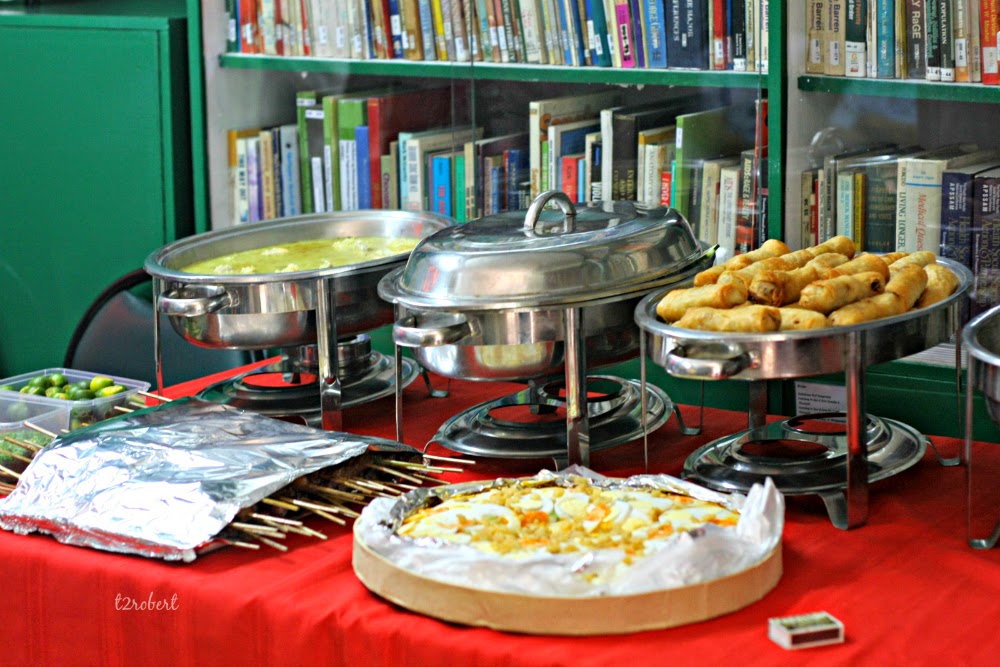
PRO-LIFE PHILIPPINES' NEW OFFICE BLESSING


The new office of Pro-Life Philippines Foundation, Inc. was inaugurated yesterday, Tuesday, July 1, 2014.

Pro-Life Philippines Foundation Inc., has moved to its new office at #70 Main Horseshoe Drive, Horseshoe Village, Quezon City. It is very near Robinson’s Magnolia and walking distance from Gilmore Station at the LRT. The office is Pro-Life’s new home and rest assured that we will continue the arduous task of promoting the culture of life here.


Blessing officiated by Rev. Fr. Dave Clay.


You may contact Pro-Life Philippines Foundation, Inc. through CP No. 0919-2337783 or through landline number (02) 6556202 / Telefax: (02) 5716550 or email: life@prolife.org.ph

Monday, June 23, 2014

CFC-FFL 33rd Anniversary


Empowered... Fearless...

The Couples for Christ Foundation for Family and Life (CFC-FFL) celebrated its 33rd Anniversary last Sunday, June 22, 2014 at Ynares Sportscenter, Antipolo City.

Choose to be brave... called to be saints. Sent forth as heroes!

2 Timothy 1:7-8

For God did not give us a spirit of cowardice but rather of power and love and self-control. So do not be ashamed of your testimony to our Lord, nor of me, a prisoner for his sake; but bear your share of hardship for the gospel with the strength that comes from God,

Eucharistic Celebration led by Most Rev. Gabriel V. Reyes D.D.
Bishop of Antipolo and Rev. Fr. Francis Gustilo, SDB.
CFC-FFL Servant General Frank A. Padilla


Related Post: CFC-FFL 32nd Anniversary


Monday, March 24, 2014

PLSOL Lenten Pilgrimage 2014


The Parish of the Last Supper of Our Lord (PLSOL) of the Diocese of Paranaque, had a successful Lenten Pilgrimage last Saturday, March 22, 2014. Led by our parish priest, Rev. Fr. Angel Sanchez, more than 300 parishioners participated in this year's Visita Iglesia in seven (7) Pilgrim Churches of Bataan. 

Our trip also included a trip to Mount Samat National Shrine or Dambana ng Kagitingan (Shrine of Valour), a historical shrine located near the summit of Mount Samat in the town of Pilar, Province of Bataan, in the Republic of the Philippines. The memorial shrine complex was built to honor and remember the gallantry of Filipino and American soldiers who fought during World War II. Consisting of a Colonnade and the large memorial cross, the park was commissioned in 1966 by then president Ferdinand Marcos, himself a war veteran, for the 25th Anniversary of WWII. The White Memorial Cross stands as a remembrance to the soldiers who fought and lost their lives in the Battle of Bataan. The shrine complex also includes a war museum with a wide array of collections from paintings of the Philippine Heroes, to armaments used by the Filipino, American and Japanese forces during the battle.


1. St. Catherine of Siena, Samal Bataan (Holy Mass, 1st and 2nd Station)

It is the most intact “convent” of all Bataan’s churches. The parish was entrusted to the Dominicans in 1596. The church was destroyed during the Dutch invasion and the Philippine Revolution. Dutch invaders attacked in April 1647. But the local garrison of Pampanga under the command of Alejo Aguas repelled the Dutch forces. The church and the convent were ruined during the invasion. In 1896, the church was burned by the Katipuneros to drive out their enemies in the convent. The church and convent was rebuilt in 1903.


2. St. Dominic de Guzman Parish, Abucay Bataan (3rd and 4th Station)

Abucay Church is a National Historic Landmark. The spiritual ministration of Abucay was entrusted to the Dominicans in 1588. It is significant because a fierce battle between the Dutch invaders and the Kapampangan defenders was fought in the area surrounding the church on June 23, 1647. Nearly two hundred Kapampangans were put to death, and fory others, together with Spanish alcalde mayor and two Dominican priests, were taken prisoners to Batavia (Jakarta). The printing press of Tomas Pinpin operated in Abucay.


3. St. Joseph Cathedral, Balanga Bataan (5th and 6th Station)

Balanga became independent parish in 1739. The Balanga Cathedral is the seat of the Diocese of Balanga Bataan. Unfortunately, they layered the façade with new bricks thereby altering the character of the church.


4. Our Lady of the Pillar Parish, Pilar Bataan (7th and 8th Station)

Pilar Church is another well-preserved adobe church structure of Bataan with its belfry located on top of the main façade. Pilar Church was made an independent vicariate on March 10, 1801.


5. St. Michael the Archangel Parish, Orion Bataan (9th and 10th station)

The best preserved “retablo” in the province of Bataan. The marker outside the church mentions that Orion became independent from Abucay in 1667. The church was damaged during the 1852 earthquake and repaired in 1854. Cayetano Arellano, the first Filipino chief justice is from Orion. Francisco Balagtas, author of Florante at Laura, also lived in the town from 1842 to 1862.


6. Our Lady of the Most Holy Rosary, Orani Bataan (11th and 12th Station)

The “Nuestra Señora del Santo Rosario de Orani” Church was also declared as a “Dambana ng Paglalakbay” (Pilgrim Shrine) on August 22, 2004 by then Bishop of Balanga and now Archbishop of Lingayen Socrates B. Villegas. The Roman Catholic Church of Orani, declared as an independent parish on April 21, 1714. The church houses the miraculous image of “La Virgen Milagrosa de Orani” and beside the church a museum dedicated for the patroness collection of jewels and dresses.


7. St. Peter Verona Parish, Hermosa Bataan (13th and 14th Station)

Long ago, the people of Hermosa who live near the river found a boat with a statue of a saint inside it. They found out that it was St. Peter of Verona and this is the reason why the said saint became the patron of this community. The image of St. Peter of Verona is very unusual since this is the only image of a saint with a large knife stuck to his head symbolizing his martyrdom.


Related post:

PLSOL Lenten Pilgrimage 2013

Wednesday, March 5, 2014

ASH WEDNESDAY 2014


Repent, and believe the Gospel.
—Mark 1:15

Ash Wednesday is a day of fasting and abstinence, and the start of the Lenten Season in the Philippines. The blessed ashes is "imposed" on the forehead (sign of a cross) of the faithful as a sign of conversion, penance, fasting and symbol of human fragility and mortality.

For you are dust and to dust you shall return.
—Genesis 3:19

Taken at the Parish of the Last Supper of Our Lord (PLSOL)
Las Pinas City, Philippines. 6:30 AM Mass
presided over by Rev. Fr. Rey Tumbocon.


Lent message of Pope Francis below:

He Became Poor, So That by His Poverty You Might Become Rich
by Pope Francis


Dear Brothers and Sisters,

As Lent draws near, I would like to offer some helpful thoughts on our path of conversion as individuals and as a community. These insights are inspired by the words of Saint Paul: “For you know the grace of our Lord Jesus Christ, that though he was rich, yet for your sake he became poor, so that by his poverty you might become rich” (2 Cor 8:9). The Apostle was writing to the Christians of Corinth to encourage them to be generous in helping the faithful in Jerusalem who were in need. What do these words of Saint Paul mean for us Christians today? What does this invitation to poverty, a life of evangelical poverty, mean to us today?

Christ’s grace

First of all, it shows us how God works. He does not reveal himself cloaked in worldly power and wealth but rather in weakness and poverty: “though He was rich, yet for your sake he became poor …”. Christ, the eternal Son of God, one with the Father in power and glory, chose to be poor; he came amongst us and drew near to each of us; he set aside his glory and emptied himself so that he could be like us in all things (cf. Phil 2:7; Heb 4:15). God’s becoming man is a great mystery! But the reason for all this is his love, a love which is grace, generosity, a desire to draw near, a love which does not hesitate to offer itself in sacrifice for the beloved. Charity, love, is sharing with the one we love in all things. Love makes us similar, it creates equality, it breaks down walls and eliminates distances. God did this with us. Indeed, Jesus “worked with human hands, thought with a human mind, acted by human choice and loved with a human heart. Born of the Virgin Mary, he truly became one of us, like us in all things except sin.” (Gaudium et Spes, 22).

By making himself poor, Jesus did not seek poverty for its own sake but, as Saint Paul says “that by his poverty you might become rich”. This is no mere play on words or a catch phrase. Rather, it sums up God’s logic, the logic of love, the logic of the incarnation and the cross. God did not let our salvation drop down from heaven, like someone who gives alms from their abundance out of a sense of altruism and piety. Christ’s love is different! When Jesus stepped into the waters of the Jordan and was baptized by John the Baptist, he did so not because he was in need of repentance, or conversion; he did it to be among people who need forgiveness, among us sinners, and to take upon himself the burden of our sins. In this way he chose to comfort us, to save us, to free us from our misery. It is striking that the Apostle states that we were set free, not by Christ’s riches but by his poverty. Yet Saint Paul is well aware of the “the unsearchable riches of Christ” (Eph 3:8), that he is “heir of all things” (Heb 1:2).

So what is this poverty by which Christ frees us and enriches us? It is his way of loving us, his way of being our neighbour, just as the Good Samaritan was neighbour to the man left half dead by the side of the road (cf. Lk 10:25ff). What gives us true freedom, true salvation and true happiness is the compassion, tenderness and solidarity of his love. Christ’s poverty which enriches us is his taking flesh and bearing our weaknesses and sins as an expression of God’s infinite mercy to us. Christ’s poverty is the greatest treasure of all: Jesus wealth is that of his boundless confidence in God the Father, his constant trust, his desire always and only to do the Father’s will and give glory to him. Jesus is rich in the same way as a child who feels loved and who loves its parents, without doubting their love and tenderness for an instant. Jesus’ wealth lies in his being the Son; his unique relationship with the Father is the sovereign prerogative of this Messiah who is poor. When Jesus asks us to take up his “yoke which is easy”, he asks us to be enriched by his “poverty which is rich” and his “richness which is poor”, to share his filial and fraternal Spirit, to become sons and daughters in the Son, brothers and sisters in the firstborn brother (cf. Rom 8:29).

It has been said that the only real regret lies in not being a saint (L. Bloy); we could also say that there is only one real kind of poverty: not living as children of God and brothers and sisters of Christ.

Our witness

We might think that this “way” of poverty was Jesus’ way, whereas we who come after him can save the world with the right kind of human resources. This is not the case. In every time and place God continues to save mankind and the world through the poverty of Christ, who makes himself poor in the sacraments, in his word and in his Church, which is a people of the poor. God’s wealth passes not through our wealth, but invariably and exclusively through our personal and communal poverty, enlivened by the Spirit of Christ.

In imitation of our Master, we Christians are called to confront the poverty of our brothers and sisters, to touch it, to make it our own and to take practical steps to alleviate it. Destitution is not the same as poverty: destitution is poverty without faith, without support, without hope. There are three types of destitution: material, moral and spiritual. Material destitution is what is normally called poverty, and affects those living in conditions opposed to human dignity: those who lack basic rights and needs such as food, water, hygiene, work and the opportunity to develop and grow culturally. In response to this destitution, the Church offers her help, her diakonia, in meeting these needs and binding these wounds which disfigure the face of humanity. In the poor and outcast we see Christ’s face; by loving and helping the poor, we love and serve Christ. Our efforts are also directed to ending violations of human dignity, discrimination and abuse in the world, for these are so often the cause of destitution. When power, luxury and money become idols, they take priority over the need for a fair distribution of wealth. Our consciences thus need to be converted to justice, equality, simplicity and sharing.

No less a concern is moral destitution, which consists in slavery to vice and sin. How much pain is caused in families because one of their members – often a young person - is in thrall to alcohol, drugs, gambling or pornography! How many people no longer see meaning in life or prospects for the future, how many have lost hope! And how many are plunged into this destitution by unjust social conditions, by unemployment, which takes away their dignity as breadwinners, and by lack of equal access to education and health care. In such cases, moral destitution can be considered impending suicide. This type of destitution, which also causes financial ruin, is invariably linked to the spiritual destitution which we experience when we turn away from God and reject his love. If we think we don’t need God who reaches out to us though Christ, because we believe we can make do on our own, we are headed for a fall. God alone can truly save and free us.

The Gospel is the real antidote to spiritual destitution: wherever we go, we are called as Christians to proclaim the liberating news that forgiveness for sins committed is possible, that God is greater than our sinfulness, that he freely loves us at all times and that we were made for communion and eternal life. The Lord asks us to be joyous heralds of this message of mercy and hope! It is thrilling to experience the joy of spreading this good news, sharing the treasure entrusted to us, consoling broken hearts and offering hope to our brothers and sisters experiencing darkness. It means following and imitating Jesus, who sought out the poor and sinners as a shepherd lovingly seeks his lost sheep. In union with Jesus, we can courageously open up new paths of evangelization and human promotion.

Dear brothers and sisters, may this Lenten season find the whole Church ready to bear witness to all those who live in material, moral and spiritual destitution the Gospel message of the merciful love of God our Father, who is ready to embrace everyone in Christ. We can so this to the extent that we imitate Christ who became poor and enriched us by his poverty. Lent is a fitting time for self-denial; we would do well to ask ourselves what we can give up in order to help and enrich others by our own poverty. Let us not forget that real poverty hurts: no self-denial is real without this dimension of penance. I distrust a charity that costs nothing and does not hurt.

May the Holy Spirit, through whom we are “as poor, yet making many rich; as having nothing, and yet possessing everything” (2 Cor 6:10), sustain us in our resolutions and increase our concern and responsibility for human destitution, so that we can become merciful and act with mercy. In expressing this hope, I likewise pray that each individual member of the faithful and every Church community will undertake a fruitful Lenten journey. I ask all of you to pray for me. May the Lord bless you and Our Lady keep you safe.

From the Vatican, 26 December 2013

Feast of Saint Stephen, Deacon and First Martyr

FRANCIS


© Libreria Editrice Vaticana 2014

This item 10442 digitally provided courtesy of CatholicCulture.org

Thursday, February 27, 2014

Basic Ecclesial Communities (BEC) Household Prayer Meeting


Hosted by Gawaran family. Reverend Fr. Angel Sanchez, parish priest
 of the Last Supper of Our Lord (standing extreme left in white tee)
joined us. Emapalico Homes. Las Pinas City. February 26, 2014.

The formation of BECs in the Philippines have been adopted as the pastoral priority of the Church throughout the country. In 1991, the Second Plenary Council of the Philippines decreed: "Basic Ecclesial Communities under various names and forms – BCCs, small Christian communities, covenant communities – must be vigorously promoted for the full living of the Christian vocation in both urban and rural area"(PCP II article 110)

Here in the Parish of the Last Supper of Our Lord (PLSOL) under the Diocese of Paranaque, more than 30 BEC households had been established and actively participated by neighborhood of different Villages within the jurisdiction of the Parish.


Sunday, February 16, 2014

Parish Symposium - Month of February 2014

The Parish of the Last Supper of Our Lord (PLSOL), Las Piñas City, held it's regular monthly symposium, Saturday, February 15, 2014. Resource person was Mr. Ruel A. Saniel, currently the Training Consultant of Scientiam Vires Training Consultancy, who is a BS Psychology degree holder and Masters in Business Administration from Letran College, Manila, as well as a Bachelor of Law graduate from University of Perpetual Help, Las Pinas City.

He talked about the "Loving Relationship With Others". The goal of this parish community is to strengthen and help one another to grow in Christian Maturity.

Mr. Ruel A. Saniel
Closing prayer led by bro. Art Maloto


Tuesday, February 11, 2014

Feast Of Our Lady Of Lourdes

Today is the Solemnity of Our Lady of Lourdes - Mama Mary Pray for Us...

National Shrine of Our Lady of Lourdes - Grand Procession in honor of the Feast of Our Lady of Lourdes and Holy Masses.

Image of Our Lady of Lourdes
Start of the Grand Procession.

Our Lady of Lourdes is a title of the Blessed Virgin Mary invoked by Roman Catholics in honor of the Marian apparitions said to have occurred on numerous occasions in 1858 in the vicinity of Lourdes, France. The first of these is the apparition of 11 February 1858, when Saint Bernadette Soubirous, a 14-year-old peasant girl, admitted to her mother that a "lady" spoke to her in the cave of Massabielle (a mile from the town) while she was gathering firewood with her sister and a friend.[1] Similar appearances of the "lady" were reported on seventeen further occasions that year. 

Bernadette Soubirous was later canonized as a Saint, and Roman Catholics and some Protestants believe her apparitions have been validated by the overwhelming popularity and testament of healings claimed to have taken place at the Lourdes water spring.


In 1862, Pope Pius IX authorized Bishop Bertrand-Sévère Laurence to permit the veneration of the Blessed Virgin Mary in Lourdes. This Marian title, Our Lady of Lourdes, has been widely copied and reproduced, often displayed in shrines or homes, most notably in garden landscapes.
http://en.wikipedia.org/wiki/Our_Lady_of_Lourdes

Inside the Shrine during the evening mass.

Gospel reading by mass presider Rev. Fr. Leny Escalada.


-----------------------
Parish of the Last Supper of Our Lord (PLSOL) 
Manila Times Village, Las Pinas City.
9:00AM Healing Mass on the Solemnity of Our Lady of Lourdes.


February 11 was proclaimed World Day of the Sick by Pope John Paul II. Therefore, it would be appropriate to celebrate the Sacrament of the Anointing of the Sick on this day during a Mass or Liturgy of the Word. (The Sacrament of the Anointing of the Sick is only to be given to "those of the faithful whose health is seriously impaired by sickness or old age", Roman Ritual. This Sacrament must not be given indiscriminately to all who take part in Masses for the sick.) >Excerpted from CatholicCulture.Org


Healing Mass at the Parish of the Last Supper of Our Lord (PLSOL)
Celebrant was Rev. Fr. Jesus "Jesse" Diaz, OSM.
February 11, 2014.


Prayer to Our Lady of Lourdes for the Sick

O powerful Virgin of Lourdes, full of affliction and with tears in our eyes, we fly unto you, Comforter of the afflicted and health of the sick. Placing in you all our confidence, cognizant of the innumerable and wonderful cures made by you not only in Lourdes but all over the world, we humbly prostrate before you in this dreadful hour of distress and sickness and beseech you with all the fervor, faith and devotion of our souls to hear the supplication which we direct to you in favor of this our beloved patient (mention the name)
Since you have worked so many cures among your devotees, do make one more and save this beloved member of our family. Take him (her) from all danger if it will not be an obstacle to his (her) salvation and we solemnly promise you to spend the rest of our lives as good and practical Catholics in thanksgiving for your powerful patronage.

Amen.

Virgin of Lourdes, pray for us (Hail Mary)
Comforter of the afflicted, pray for us (Hail Mary)
Health of the sick, pray for us (Hail Mary)
Hail, Holy Queen…